



When Oxygen Precedes Sugar: Another Story of Photosymbiosis

A team from BIAM, in collaboration with the Laboratoire de Chimie Bactérienne (LCB), proposes a new scenario for the origin of photosymbioses. Their work suggests that oxygen produced by photosynthesis, rather than sugars, may constitute the initial advantage of these associations that profoundly transformed the biosphere. Photosymbioses—the intimate associations between a non-photosynthetic organism and a […]
Interview – Winner of the Young Researchers Award

Exploring the potential of magnetotactic bacteria for the medicine of tomorrow Winner of the Young Researchers Award presented by the Aix-Marseille-Provence Metropolis, Lucia Gandarias-Albaina, a postdoctoral researcher at BIAM, has been recognized for the originality and potential applications of her work. At the crossroads of microbiology, biotechnology, and materials science, her research focuses on magnetotactic […]
IrrE, the survival enzyme of radiotolerant Deinococcus bacteria, enters the Pantheon of Peptidases

After twenty years of research on Deinococcus bacteria, renowned for their exceptional resistance to radiation and desiccation, BIAM celebrates an international recognition: the enzyme IrrE, an essential regulator of cellular survival under severe stress, has been included in the world reference book on peptidases. This chapter highlights the importance of fundamental research and opens new perspectives in […]
MTBiocare – the Grand Prix i-PhD

When Biotechnology Reinvents Cancer Diagnosis and Treatment Each year, the Grand Prix i-PhD rewards young scientists whose innovations have the potential to become high-impact start-ups. This year, Sandy Payan, an engineer at BIAM, is among the laureates with MTBiocare, a groundbreaking iron nanoparticle technology that could transform the diagnosis and treatment of solid cancers. Her […]
Inspiring young people to engage with science and environmental issues

BIAM’s Science Mentoring for Success Bringing BIAM’s Science Mentoring to Life in Schools: after a successful first year, BIAM’s Cordée de la Réussite returns for 2025‑2026. Students, teachers, and researchers will work together on hands-on projects exploring biodiversity, microalgae and biofuels, bioremediation, and school greening initiatives. A scientific and civic adventure not to be missed! […]
Bacteria, allies for reforestation in the face of drought
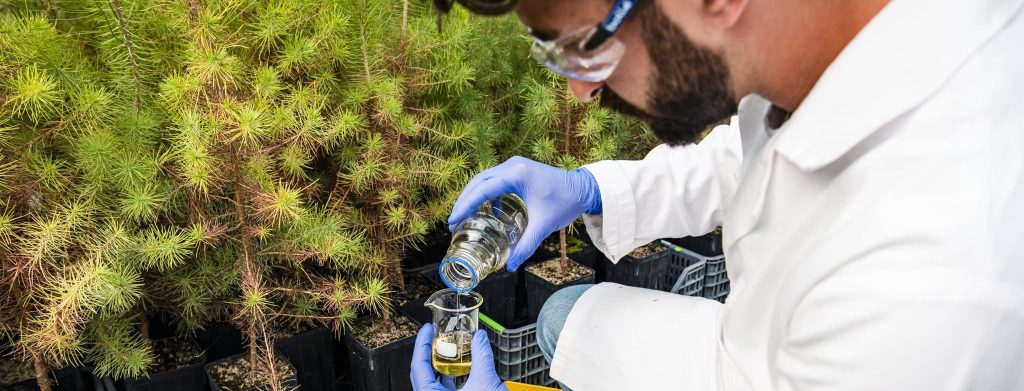
Faced with the increasing frequency and intensity of droughts that threaten young trees, BIAM is taking part in the RESTORE project, which offers a nature-inspired, eco-friendly approach to making forests more resilient. Their solution? Custom‑designed bacterial communities, isolated from forest soils that have been partially deprived of rainfall, to support the growth and survival of […]
From blue light to green fuel: bacteria that produce heptane

press release Researchers from BIAM have succeeded in producing heptane using only microorganisms and blue light. Published in Biofuel Research Journal on 1 September, this result paves the way for new solutions in green chemistry and sustainable fuel production. To produce heptane without using a single drop of oil, researchers from the CEA, CNRS, and […]
Bioenergy: oil production from microalgae just multiplied by five!

By deactivating a natural inhibitor of fatty acid synthesis, BIAM researchers have succeeded in increasing the oil content of microalgae fivefold. This is a major advance in the optimisation of bioenergy, paving the way for more efficient, sustainable production. Fatty acids play an essential role in the structure of cell membranes, carbon storage and signalling. […]
Controlling the flow of electrons in photosynthesis: a key to better carbon storage

BIAM researchers have discovered a new approach to enhancing the ability of microalgae to fix and store atmospheric carbon: by modulating the electron management pathways within the chloroplast, it is possible to improve the energy processes associated with photosynthesis. This breakthrough highlights the central role of energy metabolism and opens up new avenues for the […]
How do magnetotactic bacteria navigate
in sediments using the Earth’s magnetic field?

Researchers have shed light on the fascinating behavior of magnetotactic bacteria, which use the Earth’s magnetic field to navigate in complex environments. These microorganisms, which live within sediments, have demonstrated a unique ability to adapt their movement to avoid obstacles. A discovery that opens up new avenues on the understanding of microbial motility and the […]